What is Graphlit?
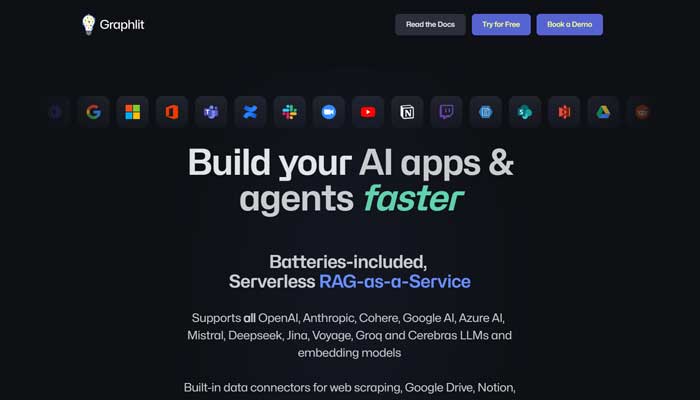
Graphlit is an advanced AI tool designed to process and extract valuable insights from unstructured data. It offers powerful features, including RAG-as-a-Service, semantic search capabilities, and content creation tools that help users engage with data in innovative ways.
RAG-as-a-Service: AI-Powered Text Extraction and Chunking with Integrated Vector Embeddings
Graphlit provides RAG-as-a-Service, a sophisticated solution that intelligently extracts text, breaks it into relevant chunks, and incorporates vector embeddings. This enables users to manage vast amounts of unstructured content effectively while maintaining the conversation history for seamless interaction.
Semantic Search: Vector-Based Search with Metadata Filtering
With semantic search, Graphlit uses advanced vector search techniques to enhance how users query data. This feature is particularly useful when dealing with large datasets, allowing for precise metadata filtering and more relevant search results.
Content Creation: Automated Content Summarization and Generation Tools
Graphlit excels in content creation, automating processes such as text summarization, social media post generation, and long-form content writing. Additionally, it can quickly summarize podcasts, videos, and transcripts, saving time and enhancing productivity.
Data Ingestion from Multiple Sources
Graphlit supports seamless data ingestion from a variety of sources, including:
- Websites
- Cloud storage platforms
- SharePoint
- Podcasts
- Jira
- Notion
- YouTube
- Emails
- Slack
This flexibility allows users to easily import unstructured data in any format for processing.
Ingest Unstructured Data Formats
Graphlit allows users to ingest a wide range of unstructured data formats, such as:
- Documents
- Audio files
- Video content
- Image files
This enables comprehensive processing of diverse types of media and information.
Key Features and Use Cases
- Offer AI-Powered Conversations on Unstructured Data: Graphlit enables the creation of RAG-driven conversations based on unstructured data. This feature enhances user interactions, making it easier to extract relevant insights from complex datasets.
- Extract JSON from Documents, Audio Transcripts, and Web Pages: With Graphlit, users can effortlessly extract JSON data from documents, audio transcripts, and web pages, streamlining data analysis and integration into various workflows.
- Generate AI-Generated Audio Summaries of Slack Messages or Emails: Graphlit can automatically create audio summaries of Slack messages and emails, providing an efficient way to digest important content without reading.
Conclusion
Graphlit offers a comprehensive suite of features for efficiently handling unstructured data, including advanced AI-powered text extraction, semantic search, and content creation.
With its flexibility in data ingestion and diverse use cases, Graphlit is an essential tool for anyone looking to optimize their data processing and content management strategies.